



Products
Expertise by Industry

Case Studies
Knowledge

-
Data Centre Efficiency - AIGC, PUE and WUE
Data Centre Efficiency
How Free-cooling from a Natural Water Source Benefits Data Centre Efficiency
Artificial Intelligence Generated Content
The rapid rise of AIGC is driving unprecedented demand for computing power while redefining requirements for data centre performance, storage capacity, and energy efficiency. These shifts are reshaping the future of data centre development.
According to OpenAI, the computing power required for AI training has increased by approximately 300,000 times in recent years.
Most existing data centres are not equipped to support the demands of next-generation AI models. The emergence of large multimodal models such as GPT-5 and Gemini signals a new era of AI, characterized by exponentially growing data volumes and computing requirements.
As a result, high-density data centres have become the industry's new benchmark. By enabling large-scale deployment of high-density racks, they maximize computing capacity per square foot while leveraging advanced technologies such as liquid cooling to improve energy efficiency and support sustainable operations.
Leading hyper-scale operators agree that the next generation of data centres must deliver four core capabilities: advanced technology, high computing power, superior energy efficiency, and robust security.
Measuring Efficiency
PUE and WUE are standard metrics used to measure data centre efficiency.
PUE measures how efficiently a data centre uses energy. It compares total facility power to the power delivered to computing equipment.
WUE measures the sustainability of a data centre regarding water consumption. It tracks water used for cooling systems and site humidification.
PUE (Power Usage Effectiveness)
PUE measures how efficiently a data centre uses energy. It compares total facility power to the power delivered to computing equipment.
- Formula: Total Facility Power divided by IT Equipment Power.
- Ideal Score: 1.0 is the perfect score. It means all power goes directly to the IT equipment.
- Industry Average: Most modern data centres average between 1.5 and 1.8.
- Meaning: Lower scores mean less energy is wasted on cooling and lighting.
WUE (Water Usage Effectiveness)
WUE measures the sustainability of a data centre regarding water consumption. It tracks water used for cooling systems and site humidification.
- Formula: Annual Water Usage (litres) divided by IT Equipment Energy (kilowatt-hours).
- Ideal Score: 0.0 is perfect. It means no water is used for cooling.
- Industry Context: This metric is critical for data centres in drought-prone areas.
- Meaning: Lower scores mean the facility uses less water per unit of computing power.
Reducing Water Loss and Power Consumption
Advances in computing technology have raised the critical temperature for data centre operations. At the same time advances in cooling technology have reduced the reliance on power hungry air-con and evaporative cooling systems.
A simplistic modern data centre cooling system comprises an open loop water free-cooling system (also called a ‘Once-Through Cooling System’), a coolant distribution unit (CDU), and a closed loop cooling system.
Once-through Raw Water Systems
Once-through raw water systems are ideal for cooling high-density AI hardware. Water scores over air cooling because it has a superior thermal capacity and ability to handle extreme, continuous heat loads. Modern AI data centres can operate at 40kW + per rack, and can generate more heat than evaporative systems can practically manage.
Once-through systems leverage the massive thermal mass of a natural body of water. Water has a specific heat capacity four times higher than air, allowing it to absorb enormous amounts of heat directly through a liquid-to-liquid heat exchanger, a typical coolant distribution unit (CDU).
Data centres require liquid cooling directly at the chip level because air cannot dissipate their concentrated heat.
AI hardware requires an unbroken loop of cool fluid delivered straight to the server chassis. Once-through infrastructure integrates natively with these setups. The cold raw water cools an internal, ultra-clean secondary loop (using treated water or dielectric fluid) the CDU. This secondary loop is then pumped directly into the server chips, providing the precise, low-temperature fluid needed to prevent AI hardware from overheating.
A once-through system is very water efficient, using and returning to source 100% of the water it uses. The secondary closed loop requires no additional water.
Raw water-cooling systems by-pass municipal water infrastructure entirely, having little or no impact on other water consumers, and keeping water costs to a minimum.
Location, Location, Location
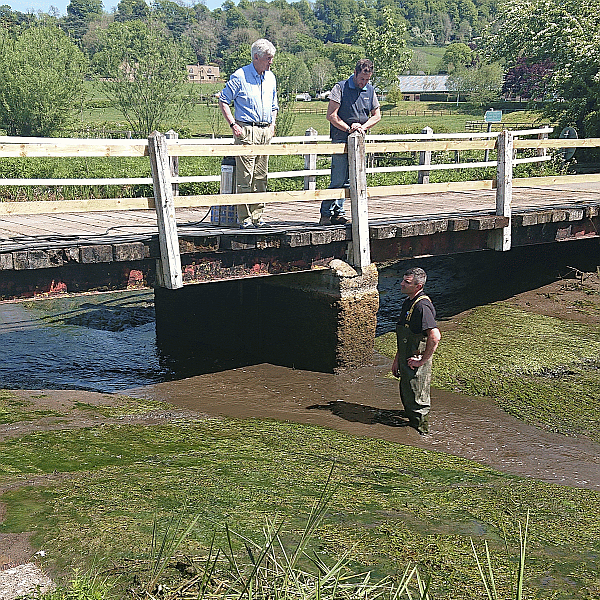
A ready and reliable source of cooling water is essential for a free-cooling water system. The sea a lake or a large river can provide the necessary volume of water and may even allow for a gravity fed system, further reducing power consumption.
Optimal siting and design of data centres is critical for achieving maximum efficiency. There may also be additional benefits and cost savings to be obtained from the re-use of cooling water. For example, siting a data centre on a river in a metropolitan area can enable to use of warmed cooling water for further heat exchange or use in a district heating system.
Filtration, Filtration, Filtration
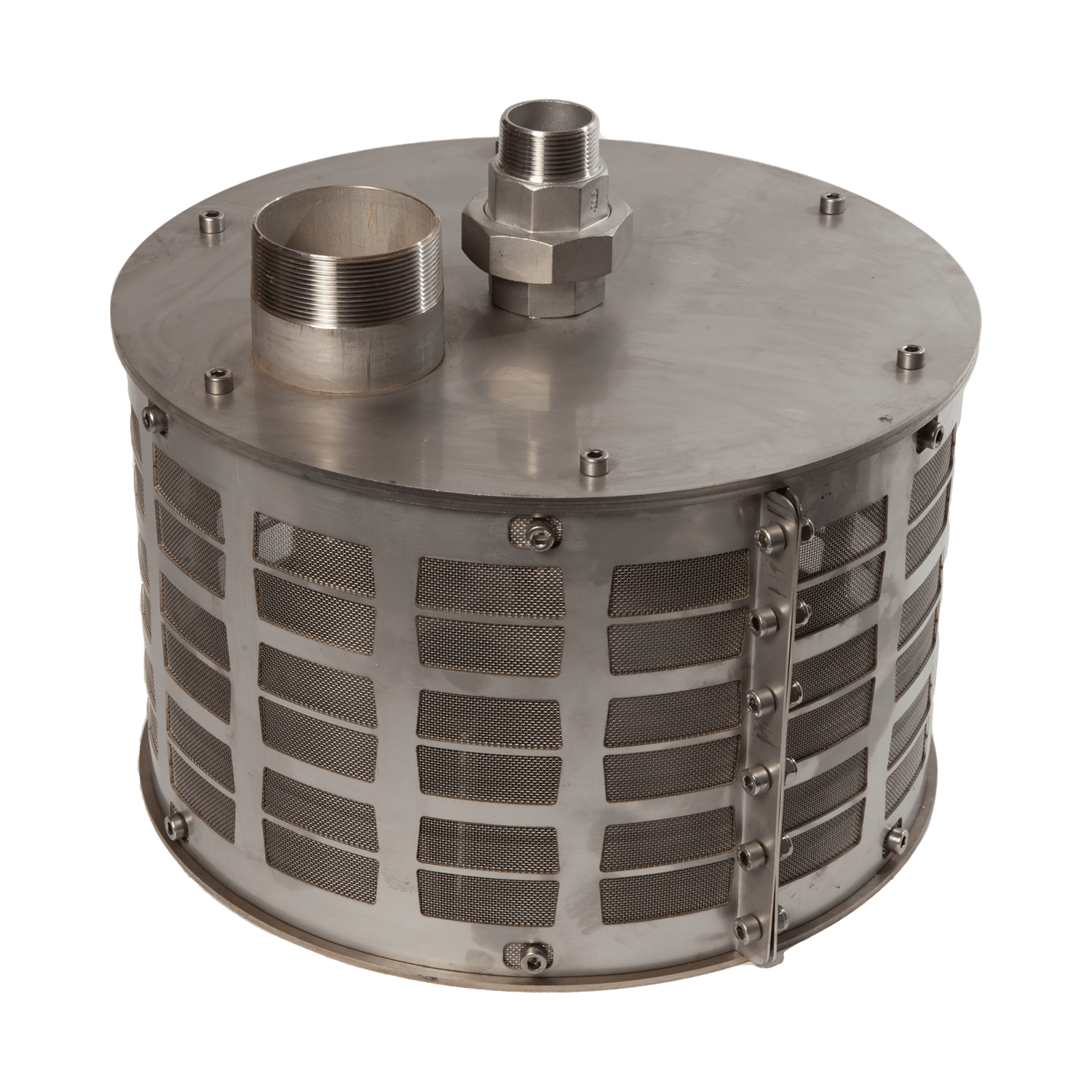
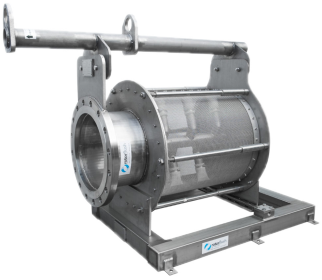
Natural or raw water, while providing a ready source of coolant, needs to be screened. Heat exchanger designs vary, but all have narrow apertures through which cooling water flows to absorb heat.
A common design is a plate and frame heat exchanger, composed of tightly packed, corrugated metal plates. This configuration creates highly turbulent flow and an exceptionally high heat transfer coefficient. The minimum aperture size within the heat exchanger will determine the degree of filtration of intake water.
Any blockage or build up of debris will compromise the efficiency of the heat exchanger. For some systems there are several filtration processes, particularly if the heat exchange has very small tolerances. Intake water can be screened to for example 200 microns, but further inline filtration may be required to protect the CDU.
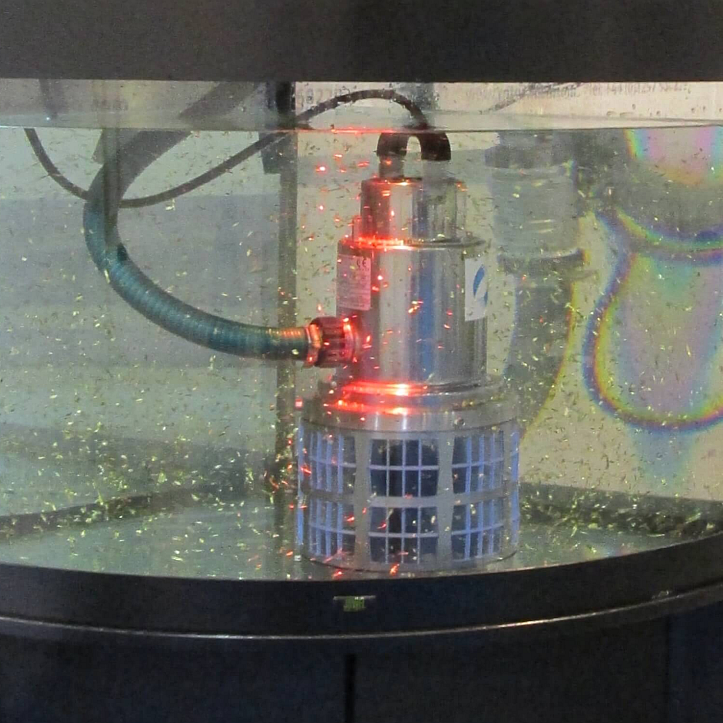
Intake water may need to be screened for environmental and regulatory reasons as well as for the protection of equipment. Rotorflush Filters Ltd are experts in screening raw water and can advise on screen types and usage.

Message us
Get in touch today
Contact Form Title
Get the Self-Cleaning Filter your project requires, talk to our friendly team